Monday, July 28, 2025

Week 1: Migration monitoring is upon us!

21-27 July 2025

Rocky Point Bird Observatory is back for another autumn season! Every day since 21 July, we have been operating our standardised migration monitoring at both of our sites: Rocky Point (no public access) and Pedder Bay (open to the public). We will continue this until our monitoring season ends on 18 October. In the interim, this blog will be updated each week by our banding crew to share news and photos from our stations. To find out more about our operations, why we do what we do and, perhaps, how to get involved, head over to www.rpbo.org!

Our current crew consists of myself (Max Hellicar) as bander-in-charge, Mara Hanneson, Sonja Futehally and Rebecca Reader-Lee as banders, along with Andrew Jacobs as assistant bander. Next month, we will be receiving a new member of crew – Gaelin Armstrong – as assistant bander, along with Megan Miller, who will switch places with Rebecca as a bander. And, as always, we have a huge amount of support from a bunch of excellent volunteers!

Day one: a new season dawns upon Rocky Point

Rocky Point kicked off the season with 78 birds banded on the first day. The daily rate slowed from there, as is usual, with the week’s total ending on 317 new birds of 44 species. The five most numerous species banded were White-crowned Sparrow (48), American Goldfinch (29), Song Sparrow (28), Wilson’s Warbler (23) and Rufous Hummingbird (21). It’s always nice to have a decent showing of hummers!

Puget Sound White-crowned Sparrow: one of many juveniles encountered (Max Hellicar)

Juvenile Puget Sound White-crowned Sparrow (Max Hellicar)

Unusual captures included Red-breasted Sapsucker (12th banding record for the station), two Olive-sided Flycatchers (average of 1 banded per year, 2000-2024), Hairy Woodpecker (average 1 per year), Northern Rough-winged Swallow (average 1.1 per year, but first for 7 years), Barn Swallow (average 1.1 per year). After an annual record high of 5 Olive-sided Flycatchers banded here last year, it is fantastic to see them having an above average year again!

Olive-sided Flycatcher (Max Hellicar)

The oldest recaptures here were a Swainson’s Thrush who was banded as a second year in 2019 and an American Goldfinch who was also banded in 2019. Both are cool, but the thrush will have migrated to Central America and back seven times, so I’m willing to bet it’s put in a few more air miles than the goldfinch!

This Swainson's Thrush was banded in 2019 (Max Hellicar)

Adult male American Goldfinch (Max Hellicar)

Week one's banding totals at Rocky Point

Pedder Bay started the season with 47 birds banded on day one. Again, the daily rate of birds slowed as the week progressed. The week ended with a grand total of 205 birds banded of 29 species – a fair portion lower than Rocky, in terms of both numbers and species. The five most numerous species banded were Swainson’s Thrush (24), Bushtit (20), White-crowned Sparrow (16), Purple Finch (14) and Wilson’s Warbler (14). Our most unusual captures included a Violet-green Swallow (just the 4th banding record for the site) and a Red-breasted Sapsucker (average of 6.5 banded per year). The oldest recapture here was a Western Tanager who was banded in 2023.

Juvenile Violet-green Swallow (Max Hellicar)

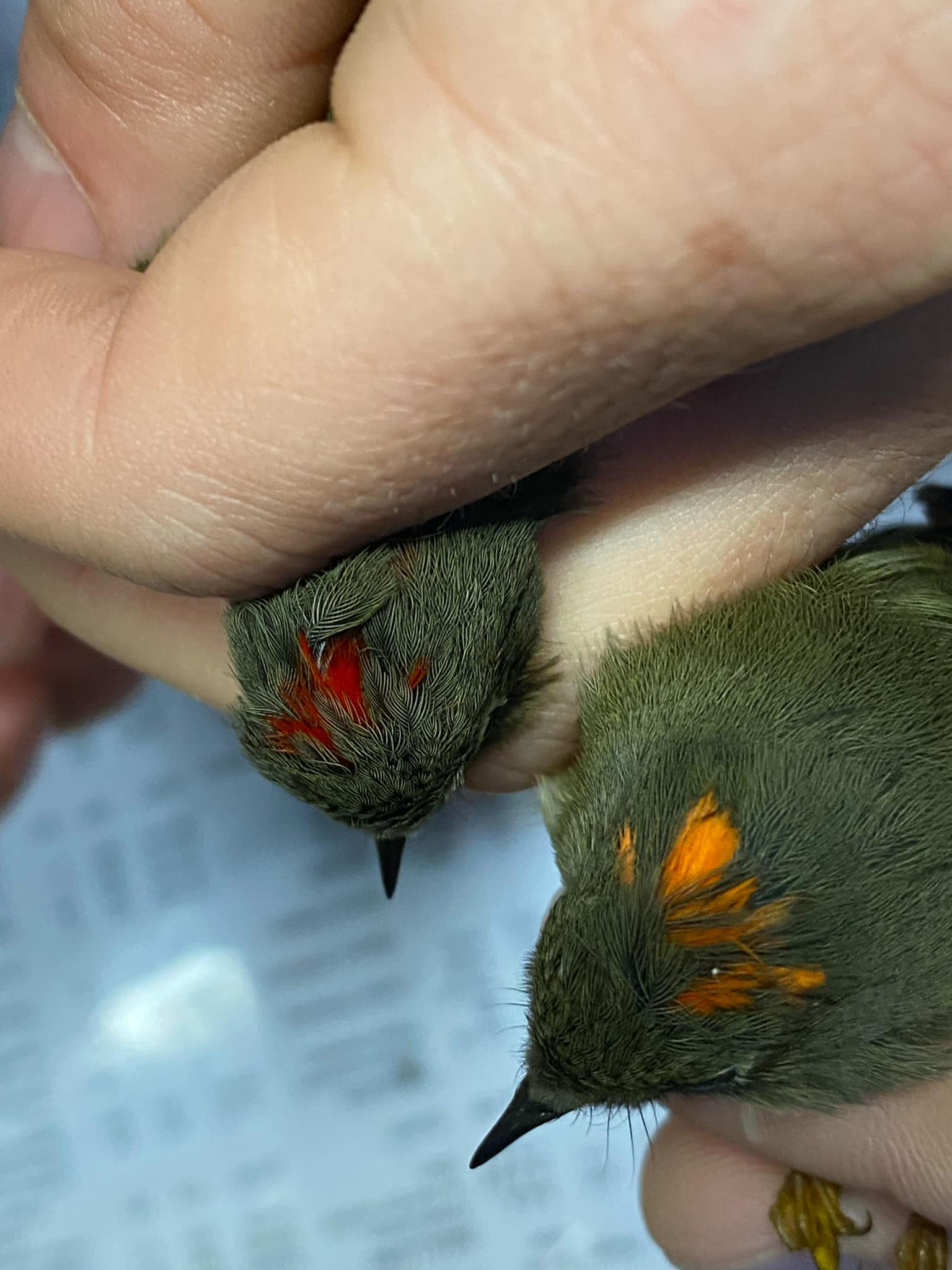
Hatch year Red-breasted Sapsucker (Max Hellicar)

Week one's banding totals at Pedder Bay

Thanks must go to everyone who has assisted with our first week of the season, along with the pre-season setup. If I've kept your attention so far, enjoy some more photos and stay tuned for our next update!

The new trend for taking in-hand photos of birds (Robyn Byrne)

A Red-breasted Sapsucker receiving a uniquely numbered band (Mara Hanneson)

Anna's Hummingbird (Mara Hanneson)

Second year male Western Tanager (Max Hellicar)

Juvenile Cedar Waxwing (Max Hellicar)

Quite nice tails they have! (Max Hellicar)

Monday, October 21, 2024

Week 13: A Conclusion of Kinglets

In the words of A.A. Milne: "How lucky I am to have something that makes saying goodbye so hard". 

This sentiment hit home as I write this last blog and reflect on the incredible season of Migration Monitoring that has now come to a close. This week saw many remarks on how quick the season seemed to fly by. As bittersweet as the wrap-up may be, we can rejoice in the fact that migration is still underway, and it's a great time to get out birding! A heartfelt thank you to all who make this work possible (and so enjoyable). Now, on to the birds!

Pedder Bay's final bird for 2024 - a Male Ruby-crowned Kinglet (Evan Lewis)

Pedder Bay station wrapped up the week with 258 birds banded, bringing the season total to 2819! Unfortunately, when compared to the historical average of 3147, this places 2024 as the third lowest season. This also represents one of only five seasons which haven't surpassed 3000 birds banded. 

This week, 25% of the birds banded at Pedder Bay were Ruby-crowned Kinglets, and they comprised a third of the station's season total for this species. It's interesting to note that this week also had the busiest day of the season for Pedder Bay. 

Pedder is Red-der? Season Banding Totals (Evan Lewis

A recap Anna's Hummingbird originally banded at
Pedder Bay in July ... thanks for coming back! (Emma Radziul)

Rocky Point station banded 317 new birds this week, for a season total of 4051! This year-end total ushers the season into the 4th highest spot (historical average being 3296). A strange trend occurred this year, where Rocky Point had both the earliest, and latest, 100-bird days in the 30-year history of RPBO operations. In addition, those were the only two days with over 100 banded birds! 

This week, on the penultimate day of migration monitoring, the first of the year Varied Thrush was finally banded. Both stations have enjoyed hearing and seeing this species over the last month, but it was a treat to finally find one in the nets at Rocky. As with Pedder Bay, Ruby-crowned Kinglets made up a large percentage of birds banded this week (137 individuals!). 

RP's final bird of the season - an American Robin (David Bell)


Varied Thrush! (Emma Radziul)

Closing day crew at Rocky Point, including Ann who took the photo! (Ann Nightingale)

As Ruby-crowned Kinglets were our top banded bird this week, it seems fitting to give them the spotlight for a moment. These tiny birds are often overlooked as they flit through branches and shrubs, feeding on small spiders and insects. When we are banding this species, we look to their tail shape to help determine age. A pointed, "sharp" tail likely points to a young bird, whereas an adult (or "after hatch-year") would have blunt ends to its tail feathers. As with most things, a grey area exists, and other factors will be considered to help identify the bird's age. 

Comparing rectrices (tail feathers) in two Ruby-crowned Kinglets (Tamara Wolowicz)

A variety of shades have been noted in the crowns of several RCKI (Evan Lewis)

Bird #4000 at RP! Golden-crowned Kinglet (David Bell)

Beautiful Pedder Bay (Evan Lewis)

Pacific Wren #100 at Rocky Point (Mara Hanneson)

Banded Totals (click to enlarge)

Rocky Point sunrise - what a sight to behold! (David Bell)

Monday, October 14, 2024

Week 12: Frolic in the Meadow

With the start of rainy season upon us and cooler temperatures in the mornings, the last neotropical stragglers are coming through the stations and the late-season birds are moving in, providing us some exciting days of migration!

With the rains north of us finally abating, we had a good push of migrants mid-week, giving us a few busy days in a row at the stations. Our weekly totals ended up at 350 new bands for Rocky Point and 314 for Pedder Bay, with Ruby-crowned Kinglet (107), Dark-eyed Junco (96), and Fox Sparrow (85) topping the charts. Some late stragglers banded this week included Western and Hammond's flycatchers, Yellow and MacGillivray's warblers, a Chipping Sparrow, and a few Swainson's Thrushes; all of these species are typically well south of us by this point in the season! Our big highlight this week in the nets came on October 9th, when a Western Meadowlark went into net 2 at Rocky Point, giving us a first banding record for RPBO! This also happened to be our first meadowlark of the season seen at the stations. Check out the intricate patterns and colours on this female!

Western Meadowlark (David Bell)
Both stations caught a "Red" Fox Sparrow on the same day this week (David Bell)
White-throated Sparrows haven't been around in the numbers we've gotten used to over the last few years...yet (Mara Hanneson)

A feisty young Sharp-shinned Hawk, possibly from the Haida Gwaii population due to the streaked undertail coverts? (David Bell)

Our oldest bird award this week was a two-way tie, with Pedder Bay catching a Spotted Towhee originally banded on 26 August 2019, and Rocky Point catching a Song Sparrow banded on 14 August 2019. Both birds were originally banded as hatch-years, making them five years old now! Sparrow season is always exciting for these old recaptures, as individuals often pick the same wintering location year after year, and we had several recap sparrows from previous years this week besides those two. 

Marsh Wren - always a fun bird to see up close (David Bell)

With some late stragglers around during the big push of birds this week, we had a good diversity of species at the stations, even reaching the 100-species mark at Rocky Point once or twice. New species for the season included Lesser Scaup, Snow Goose, and Ring-necked Duck at Rocky Point and Wilson's Snipe at Pedder Bay. Visible migration (vismig for short) this week was also great, with several mornings having thousands of American Robins flying over at Rocky Point, along with good numbers of Varied Thrushes, finches, blackbirds and Yellow-rumped Warblers. Raptor migration is still going strong, with kettles of Turkey Vultures evident this week, and a late Broad-winged Hawk seen at Rocky Point. Waterbird migration is also going strong, with numbers and diversity of ducks, loons, alcids, and gulls picking up during seawatch, along with the ongoing incursion of Short-tailed Shearwaters putting some mornings into quadruple-digits for this species. A highlight during all this bird movement was a Pygmy Nuthatch seen by Pier at Rocky Point on the 11th; it has yet to be refound but we are hoping it will make its way into a net at some point this week!

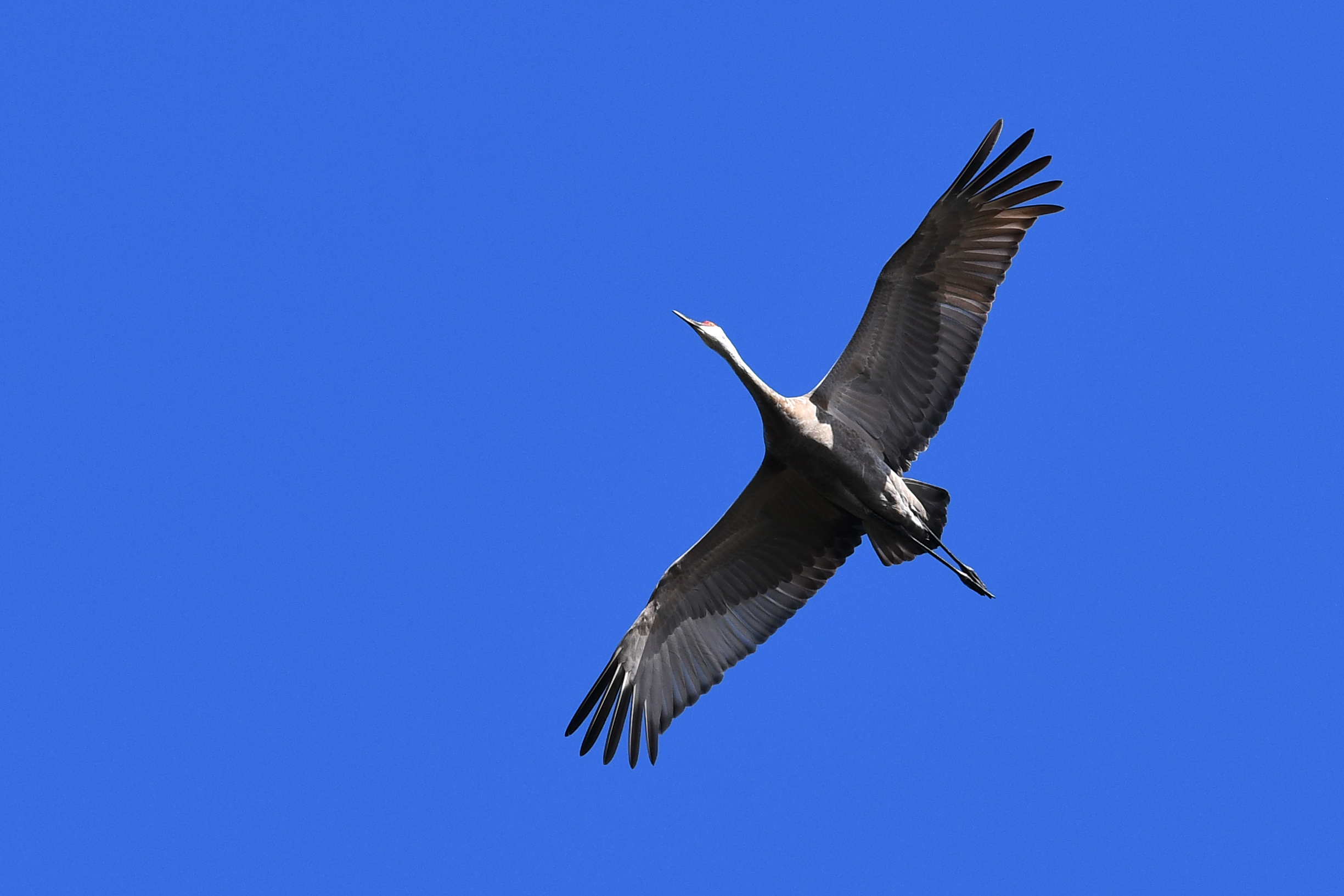
This Sandhill Crane has been hanging around at Rocky Point for a couple of weeks now! (David Bell)

As always, the wildlife at the stations provides entertainment when the birds aren't enough, as the local Black Bears fatten up for winter, numerous Humpback Whales forage in the strait, the Black-tailed Deer are going into their fall rut, the Pacific Chorus Frogs provide ambiance on rainy days, and various insects keep us occupied with attempting to identify them. A huge burst of the aurora borealis this week was also enjoyed by our owl banders, and by a few of us who are fortunate enough to live in places with dark-ish skies!

A Black Bear chowing down on apples at Rocky Point (David Bell)


Auroras over Rocky Point (Mark Byrne)

Once again, a big thank-you to our volunteers! Your efforts and dedication are much appreciated. There are still a few empty slots available for this week - get out there and enjoy the last few days of the season!

Our daily and weekly totals for the stations are below:

Pedder Bay
6 Oct  
7th
8th 9th 10th 11th  12thTotal
Banded   
48
26
22
71
76
42
29
314
Species banded
13
9
8
13
13
16
9
25
Recap
5
7
11
9
9
13
11
65
Species recap
4
5
6
6
6
9
7
16
Rocky Point
6 Oct 7th8th9th10th11th12thTotal
Banded
40
37
14
78
79
70
32
350
Species banded
14
12
8
17
15
17
12
35
Recap
17
7
7
7
8
11
5
62
Species recap
9
6
5
7
6
5
5
17


A rare find in the nets at Rocky Point; although we don't band California Quail, they are always neat to see up close. (David Bell)

Week 12 totals (right click and open in new tab to view large)

Sunday, October 6, 2024

Week 11: Cool Mornings and Busy Nets


The days this week began with cool, damp mornings, where dewy spider webs shined in the early light, followed by warm sun in the early afternoons. The season is winding down, and the later migrants, like kinglets and sparrows, are filling the nets. Flycatchers and Warblers, however, are becoming increasingly rare. Overhead, the skies have been full of Turkey Vultures and other hawks, while the calls of geese—Cackling, Canada, and Greater White-fronted—echo as they fly overhead. Robins and Band-tailed Pigeons fly between the trees near the stations.

Gaelin and Mara looking east towards Rocky Point from Church Hill (David Bell)

This week, our Rocky Point station had to close early from October 1st to 3rd due to ammunition testing in the area. While the closures were unfortunate, they provided a unique opportunity to visit Church Hill, about 3 km west of our Rocky Point banding station, for a hawk watch. From this high vantage point, we witnessed impressive kettles of Turkey Vultures—up to 960 at one point—along with Band-tailed Pigeons and various raptors, including Peregrine Falcons, Sharp-shinned, Coopers and Red-tailed Hawks. It was a remarkable experience, with Turkey Vultures and Band-tailed Pigeons flying within meters of us, both above and below. Other highlights of the excursion included spotting several Western Gulls and around 1,500 Short-tailed Shearwaters in offshore waters. 

At Pedder Bay station, we banded 275 new birds this week, bringing the season total to 2,247. Dark-eyed Juncos were the most frequently banded species, with 53 new individuals.

An Oregon Dark-eyed Junco (Gaelin Armstrong)

A less common Slate/Cismonatus Dark-eyed Junco (Gaelin Armstrong)


Rocky Point station banded 270 new birds this week, raising the season total to 3,384. Ruby-crowned Kinglets were the top species, with 72 new birds banded, meaning they made up about a quarter of all captures at Rocky Point this week!


An adorable female Ruby-crowned Kinglet (Gaelin Armstrong)


Notable captures at Rocky Point include a Northern Saw-whet Owl on the morning of September 30th, which decided to take a nap after we banded it! We also banded a hatch-year female Sharp-shinned Hawk.

HY Northern Saw-whet owl - The epitome of cute(Gaelin Armstrong)

At Pedder Bay, the highlights were a couple of woodpeckers—a stunning Red-breasted Sapsucker and a noisy hatch-year female Red-shafted Northern Flicker. 

Red-breasted Sapsucker (Emma Radziul)

American Robins have also been showing up in large numbers, with a few gracing our nets, which has been a treat.

American Robin (Emma Radziul)

Other memorable birds this week include Hammonds Flycatchers and Yellow-rumped Warblers.

Yellow-rumped Warbler (Myrtle ssp) (David Bell)
Dark centers in upper tail coverts means this bird is male (David Bell)


Hammond's Flycatcher (Emma Radziul)

This internship marks my first experience with bird banding or any ornithological fieldwork. Though the learning curve was steep, and there was an overwhelming amount of information to absorb, I’ve loved every minute of it. I am incredibly grateful for the opportunity to be the fall intern at Rocky Point Bird Observatory. These past six weeks have been an amazing experience, and I’ve learned so much about bird banding and what it takes to operate a migratory bird banding station.

A special thanks to the other banders—David, Evan, Mara, and Emma—for their patience and support throughout my internship. And, of course to all the volunteers whose dedication and passion make Rocky Point such a remarkable place and passion keeps this work going.

 A handsome after-hatch-year male Yellow Warbler (Gaelin Armstrong)


Week 11 and season totals